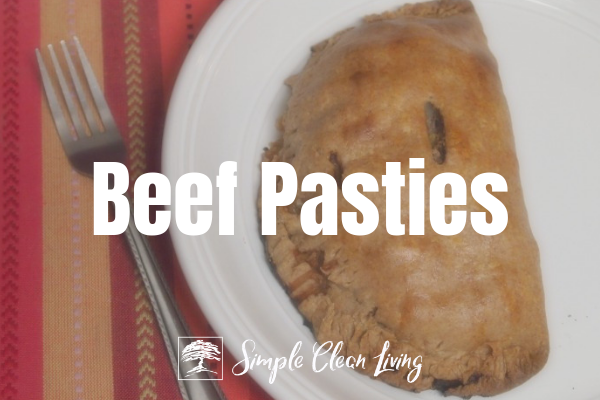
I remember sitting in my grandma’s kitchen, watching her make homemade beef pasties!
Also known as the pasty, these great meat pies actually have a pretty long history. My great-grandparents emigrated to the US from Finland in the early 1900s. They settled in the Upper Peninsula of Michigan, where copper and iron ore mining were flourishing. Many of my ancestors worked in the mines alongside British miners who had left the UK after many of the tin mines closed there. The British miners hoped that by coming to the US, they would be able to find adequate work.
They brought with them recipes for hearty, hand-held meat pies that were great to bring for lunch because they were not only filling, but portable, and could be eaten either hot or cold. They became a standard lunch for the miners.
Origins of pasties
No one actually knows the origin of the pastie, but historians believe that it may have originated with the Vikings. Some interesting facts about pasties are that they have been mentioned in the original Robin Hood ballads of the 1300s. Even Shakespeare mentioned them in “The Merry Wives of Windsor”.
No matter where it got its start, pasties are downright delicious! I actually made the crusts for my recipe from sprouted Spelt flour. The recipe had been modernized by the time it had gotten to my grandmother, and lard was replaced by shortening. But I went old school and used leaf lard, which made my crusts nice and flaky.
The original recipe for beef pasties also called for 1 1/2 lb. ground beef and 1/2 lb. sausage. I did one pound of each, and it tasted fantastic! Normally, I try to do recipes that are simple and not labor-intensive. But this recipe is a family recipe, they are special. And they are so worth it!
Beef Pasties
Ingredients
- CRUST
- 4 cups sprouted spelt or wheat flour
- 1 cup leaf lard
- 1 1/2 tsp unrefined sea salt
- 9-10 tbsp water
- FILLING
- 1 lb grass fed ground beef
- 1 lb pastured sausage
- 4 lg potatoes finely diced
- 1 lg onion finely diced
- 1 cup rutabaga peeled and very finely diced
- 6 tsp butter
- salt and pepper to taste
- Heavy cream or half and half for brushing crust tops
Instructions
- Preheat the oven to 400 degrees F.
- In a large mixing bowl add the flour and salt.
- Add the lard and blend with pastry blender until combined.
- Add the water and mix well (start with 9 tbsp and if the crust is still a little crumbly after mixed, add an additional tbsp of water.
- Divide the dough into 6 equal pieces.
- Place back in the bowl and cover with a damp towel while you make the filling.
- In another large mixing bowl combine both meats, seasonings, potatoes, rutabaga and onion.
- Mix thoroughly.
- On a floured counter or silicone mat, roll out one dough ball until it is approximately 10 inches around.
- Place 1 1/2 cups of meat mixture onto one half of the rolled dough.
- Top with 1 tsp of butter.
- Fold the other half of the dough over top of the mixture so that the two sides of the dough meet.
- Pinch the edges of the crust together and crimp the edges with a fork.
- Bake at 400 degrees F for an hour.