If you’re highly sensitive, neurodivergent, an empath, or simply someone whose body reacts strongly to the world, you may have noticed that food affects you more than it seems to affect others. It’s not in your head! Sensitive systems tend to process sensory input, stress, and even diet differently. One big factor that often gets overlooked is the role of highly processed foods.
While processed foods are convenient and everywhere, they can create challenges for sensitive bodies and brains. Understanding why can make it easier to nourish yourself with more intention and care.
What counts as “highly processed food”?
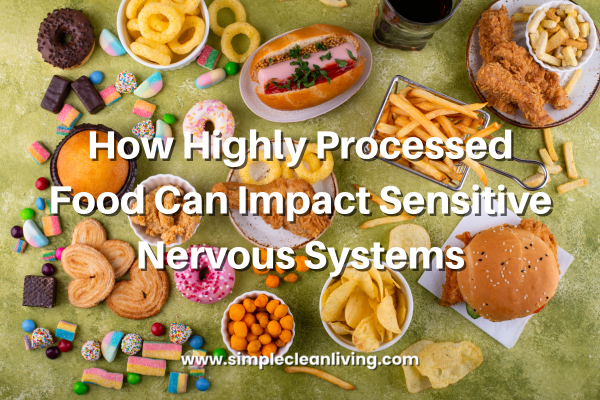
Just to be clear, not all processed food is the same. Pre-washed lettuce and frozen veggies are processed, but minimally. Highly processed foods are typically factory-made and have been altered in significant ways.This often includes:
- Additives and preservatives
- Artificial colors or flavors
- Sweeteners
- Texture enhancers
- Industrial seed oils
- Refined grains and sugars
- Long ingredient lists you can’t easily pronounce
Think along the lines of packaged snacks, fast food, sugary cereals, frozen entrees, convenience meals, or foods designed to have a long shelf life.
Why sensitive systems react differently
Sensitive nervous systems often operate in a state of heightened awareness. They detect subtle shifts in the environment…light, sound, energy, emotion, and yes, even food. Here are a few ways highly processed foods can impact a sensitive system:
Blood sugar spikes and crashes
Many processed foods are made with refined carbohydrates and added sugars that digest quickly, causing sudden rises in blood sugar followed by fast drops. For sensitive people, that roller coaster can amplify:
- Anxiety or nervousness
- Irritability
- Fatigue
- Brain fog
- Mood swings
- Shakiness or overwhelm
Stable blood sugar is foundational for emotional regulation, and processed foods make that harder to maintain.
Stimulating ingredients
Artificial dyes, flavor enhancers, caffeine additives, and certain preservatives can stimulate the nervous system. Some people are especially reactive to ingredients such as:
- MSG
- Aspartame
- Sodium benzoate
- Artificial dyes (like Red 40 or Yellow 5)
- Guarana or other hidden caffeine sources
For sensitive nervous systems, these can show up as increased heart rate, restlessness, hyperactivity, or difficulty focusing.
Inflammation and gut sensitivity
Many sensitive individuals also have digestive issues. The gut and brain are deeply connected through the gut-brain axis, and when the digestive system is inflamed or irritated, it can impact mood, cognition, and stress tolerance.
Highly processed foods that may contribute to inflammation often include:
- Refined sugars
- Industrial seed oils
- Excess sodium
- Additives and emulsifiers
For someone who already experiences gut issues, anxiety, or food sensitivities, this can make symptoms noticeably worse.
Overloading the body’s “filtration system”
The liver and detoxification pathways are always working. If you’re sensitive, you may notice you don’t tolerate alcohol, medications, fragrances, or chemicals as well as other people. Highly processed foods add another layer for your body to sort through as it deals with synthetic additives and preservatives.
This can lead to symptoms like:
- Fatigue
- Headaches
- Irritability
- Skin reactions
- Sensory overload
Emotional and sensory issues
The combination of blood sugar swings, inflammation, and stimulation can affect emotional regulation. Many sensitive individuals report feeling more anxious after eating processed foods, less mentally clear, more socially drained, and less resilient under stress
Food isn’t just fuel; it’s also information. And in sensitive bodies, that information lands loudly.
Supporting your sensitive system with food that feels good
There’s no need for perfection or rigid rules. Many people benefit from small, gradual shifts like:
- Choosing whole or minimally processed foods
- Keeping meals simple and balanced
- Including protein, fat, and fiber for blood sugar stability
- Reading labels to spot dyes, additives, or industrial oils
- Swapping packaged snacks for whole-food alternatives
- Drinking enough water
- Adding foods that support digestion, such as fermented vegetables or bone broth
The goal isn’t restriction. It’s reducing the inputs that overload your system, so you have more capacity for life.
And finally…
If you’ve ever felt “dramatic” for how food affects you, you’re not alone. Sensitive nervous systems are not flawed. They are finely tuned. When you support your body with nourishment that aligns with that wiring, everything feels more manageable: emotions, focus, energy, and resilience.
Highly processed foods won’t impact everyone the same way. But for many sensitive souls, paying attention to how you feel after eating them can be a powerful act of self-awareness and self-care.