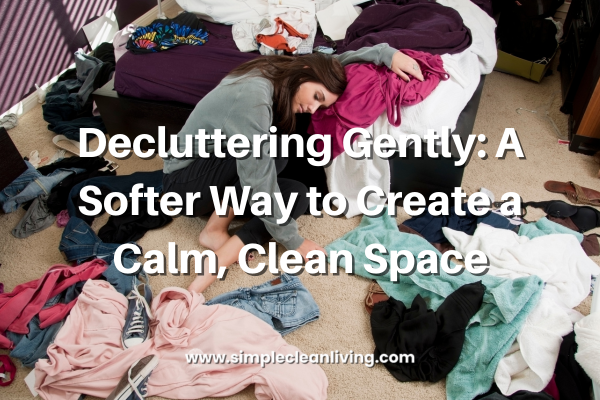
Have you ever gone to declutter a part of your home and wound up completely overstimulated or overwhelmed? When you’re sensitive, that isn’t uncommon. Decluttering is often talked about like a boot camp. Purge everything. Fill giant bags. Do it all in one weekend. If that approach works for you, that’s wonderful.
But for many of us, especially those who are sensitive, overwhelmed easily, or neurodivergent, that kind of intensity can send our nervous system straight into shutdown.
At Simple Clean Living, we believe decluttering doesn’t have to be harsh or exhausting. It can be slow. It can be kind. And it can work with your energy instead of against it.
Why Traditional Decluttering Can Feel So Hard
Decluttering isn’t just about stuff. It’s about decisions, memories, sensory input, and emotional attachment…all happening at once.
For sensitive nervous systems, this can mean:
• Feeling overwhelmed by visual clutter and choices
• Getting emotionally attached to items “just in case.”
• Experiencing guilt for getting rid of things
• Feeling pressure to do it “right” or all at once
• Freezing and avoiding the process entirely
None of this means you’re bad at decluttering. It simply means your brain and body need a gentler approach.
What Gentle Decluttering Really Means
Gentle decluttering is about pace, permission, and compassion.
It means:
• Letting go without rushing
• Decluttering in tiny, manageable moments
• Stopping before you’re exhausted
• Honoring emotional attachment without judgment
• Creating calm, not chaos
You’re not trying to win at minimalism. You’re creating a home that feels safe, soothing, and supportive.
Start Small…Smaller Than You Think
Instead of decluttering an entire room, try:
• One drawer
• One shelf
• One basket
• Five minutes at a time
Set a timer if that helps. When the time is up, stop—even if you feel like you could do more. Ending on a calm note teaches your nervous system that decluttering isn’t a threat.
Use Gentle Questions Instead of Pressure
Rather than asking, “Do I need this?” (which can feel loaded), try softer prompts:
• Does this support my life right now?
• Would I notice if it were gone?
• Is this adding calm or adding noise?
There are no wrong answers. You’re allowed to keep things that feel comforting, even if they’re not “useful.”
Create an Easy ‘Not Sure’ Zone
Decision fatigue is real. Give yourself permission to be unsure. Have a small bin or box labeled “Not Sure.” If an item feels emotionally complicated, put it there and move on.
You can revisit it later, days, weeks, or months from now, when your nervous system is more settled. Decluttering doesn’t have to be a one-time event.
Work With Your Energy, Not Against It
Some days you’ll have the capacity to declutter. Some days you won’t. Both are okay.
On low-energy days, gentle decluttering might look like:
• Throwing away obvious trash
• Returning one item to its home
• Clearing one small surface
• Simply noticing clutter without fixing it
Progress doesn’t have to be visible to be real.
Rest Is Part of the Process
Decluttering can stir up emotions…grief, nostalgia, guilt, even fear. Build in time to rest.
Take breaks. Drink water. Step outside. Light a candle. Your body deserves care while your space is changing.
A Home That Feels Like a Deep Exhale
Gentle decluttering isn’t about perfection. It’s about creating space, physically and emotionally.
A space where your nervous system can soften, where you can breathe. And that supports the slower, simpler life you’re building.
Go gently. You’re not behind. You’re doing this in a way that honors who you are. And that matters.