Notice: I’m an affiliate for Amazon as well as other companies. Any links in this article may be affiliate links. I always appreciate it if you purchase something using my affiliate links. Doing so helps me to raise a little extra money that pays for the costs of running this site. And it allows me to continue bringing you quality content, all without costing you a thing! Thanks!
For years, self-care has been marketed as bubble baths, productivity planners, morning routines, and “pushing through” discomfort in the name of growth. We’re told to wake up earlier, move harder, socialize more, and optimize every moment of our lives.
But if you’re highly sensitive, an empath, or neurodivergent, that version of self-care can feel exhausting at best…and harmful at worst.
For many of us, the problem isn’t that we’re “bad at self-care.” It’s that the advice was never designed with our nervous systems in mind.
Sensitive nervous systems need different care
Highly sensitive people, empaths, and neurodivergent individuals often process the world more deeply. Sounds feel louder. Emotions feel heavier. Social interactions require more energy. Transitions can be draining. Even “fun” activities can lead to burnout if there’s too much stimulation.
Because of this, self-care isn’t about doing more. It’s often about doing less, and doing it more intentionally.
Traditional self-care advice tends to focus on discipline, consistency, and challenge. But sensitive nervous systems thrive on safety, predictability, and gentle regulation.
When “healthy” habits aren’t actually helpful
A lot of expert-recommended self-care can backfire for sensitive or neurodivergent people, even if it’s well-intentioned.
High-intensity workouts may dysregulate your nervous system instead of energizing you. Packed social calendars may lead to emotional overwhelm. Rigid routines may trigger demand avoidance or shame when you can’t maintain them. Constant self-improvement can feel like another way to say, “You’re not enough yet.”
If you’ve ever wondered why wellness advice makes you feel worse instead of better, you’re not broken. Your body is communicating its limits.
What self-care can look like instead
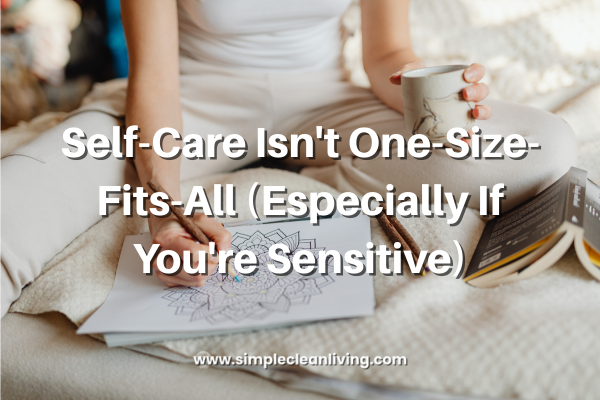
Self-care for sensitive and neurodivergent souls is often quieter, slower, and deeply personal. It’s less about aesthetics and more about nervous system support.
It might look like:
• Choosing low-impact or intuitive movement instead of structured workouts
• Spending time alone after social interactions to decompress
• Limiting news and social media consumption
• Creating sensory comfort through soft lighting, calming sounds, or cozy textures
• Letting rest be restorative, not something you “earn.”
• Honoring your need for routines and flexibility
• Saying no without explaining yourself
• Allowing your energy to ebb and flow instead of forcing consistency
Sometimes the most radical form of self-care is listening to your body when it asks for quiet.
Rest is not laziness
This is a narrative that needs to change…especially for those who are sensitive! Many sensitive and neurodivergent people carry deep shame around rest. We’ve been conditioned to believe that if we’re not producing, improving, or pushing, we’re failing.
But for those who are sensitive, rest is not a reward; it’s a requirement.
For nervous systems that are constantly scanning for input, downtime is essential for regulation and healing. True self-care may mean canceling plans, leaving early, or choosing the simple option even when your mind says you should do more.
Self-care as self-trust
At its core, self-care for sensitive souls is about rebuilding trust in yourself.
It’s learning to believe your body when it says, “This is too much,” and honoring your intuition over outside opinions.
It’s allowing your needs to be valid, even if they don’t look impressive on Instagram.
You don’t need to force yourself into someone else’s version of wellness. You get to create one that feels safe, nourishing, and sustainable.
Simple living for sensitive souls
Simple living isn’t about perfection or discipline. It’s about creating a life that supports your energy instead of draining it.
If your self-care looks softer, slower, quieter, or more unconventional, you’re doing it right.
Your nervous system knows what it needs. Your job is to listen.