Notice: I’m an affiliate for Amazon as well as other companies. Any links in this article may be affiliate links. I always appreciate it if you purchase something using my affiliate links. Doing so helps me to raise a little extra money that pays for the costs of running this site. And it allows me to continue bringing you quality content, all without costing you a thing! Thanks!
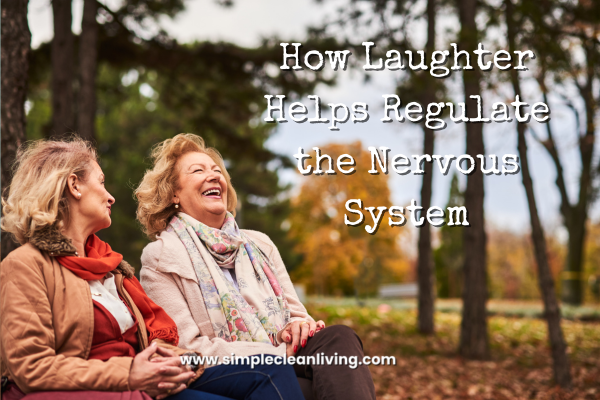
If you’ve ever had a tough day and suddenly found yourself laughing at something silly, you may have noticed that your whole body seemed to soften. Your breathing eased, your shoulders dropped, and for a moment, the world felt a little lighter. That isn’t just in your head. Laughter has a direct impact on the nervous system and can be a powerful tool for anyone seeking a simpler, calmer life.
In our busy culture, stress becomes a constant background hum in the body. Moments of genuine laughter act as a reset button, helping the nervous system shift out of survival mode and back into a more regulated state. Here’s how it works.
How stress impacts the nervous system
The nervous system has two main branches that work together: the sympathetic (fight-or-flight) and the parasympathetic (rest-and-digest). When we experience stress, the sympathetic nervous system kicks in, raising our heart rate and increasing tension in the body to help us respond to perceived threats.
The problem is that modern stressors, deadlines, financial concerns, family conflict, and overstimulation aren’t the kind of short-lived threats our bodies were built for. So the stress response stays active longer than it should, leaving us feeling wired, anxious, exhausted, or shut down.
Why laughter helps
Laughter introduces an immediate shift in the body that supports regulation. When we laugh, even if it starts off forced, the body begins to release biochemical signals that help bring the nervous system back into balance.
Some of the benefits include:
-
Lower cortisol levels: Laughter helps reduce cortisol, the primary stress hormone.
-
Boosted serotonin and dopamine: These feel-good neurotransmitters support mood, motivation, and emotional resilience.
-
Improved vagal tone: Genuine laughter increases vagal nerve activation, which supports the parasympathetic nervous system.
-
Relaxed muscle tension: Laughing naturally loosens tight muscles, especially in the neck, shoulders, chest, and jaw.
-
Deeper breathing: Laughter encourages fuller exhalations, which help calm the body and signal safety to the brain.
Together, these shifts help move the nervous system out of a fight-or-flight state and into a more grounded, regulated place.
Types of laughter that support regulation
All laughter is beneficial, but certain types help the nervous system more deeply:
-
Spontaneous laughter: Comes from something genuinely humorous or joyful.
-
Social laughter: Happens when we’re interacting with others, creating connection and safety.
-
Playful laughter: Involves movement, silliness, or creativity—something many adults lose over time.
-
Intentional laughter: Practices like laughter yoga use purposeful laughing to trigger the same physiological benefits.
Even intentional or “fake” laughter often turns into real laughter as the body responds.
Simple ways to bring more laughter into your life
Building laughter into daily life doesn’t have to be complicated. You don’t need to be naturally funny or constantly social to benefit. Try experimenting with these ideas:
-
Watch a funny show, stand-up clip, or comedy skit.
-
Spend time with someone who makes you laugh easily.
-
Reminisce about funny memories with friends or family.
-
Allow yourself to engage in playful activities…games, movement, or hobbies.
-
Try laughter yoga videos or groups online.
-
Be willing to act silly without self-judgment (this one often takes practice).
-
Follow comedians or humorous accounts that bring joy instead of stress.
The key is not forcing yourself to be lighthearted all the time—it’s simply creating opportunities for laughter to happen.
Laughter as a tool for simple living
Simple living isn’t just about reducing clutter or buying less. It’s also about creating more space for ease, joy, and emotional regulation. When we support the nervous system, everything else becomes more manageable. Decisions get clearer. Relationships feel smoother. We handle challenges with more resilience.
Laughter is a surprisingly accessible tool for that kind of simplicity. It’s free, it’s available to everyone, and it doesn’t require special equipment or long learning curves.
Stress is inevitable…but laughter can help reduce it!
Life will always bring stress. That’s part of being human. But simple practices like laughter can help shift our nervous system toward balance, making it easier to navigate the world without feeling constantly overwhelmed.
So the next time you need a reset, don’t underestimate the power of a good laugh. It may feel small, but inside your body, big things are happening, helping you live with more calm, clarity, and joy.