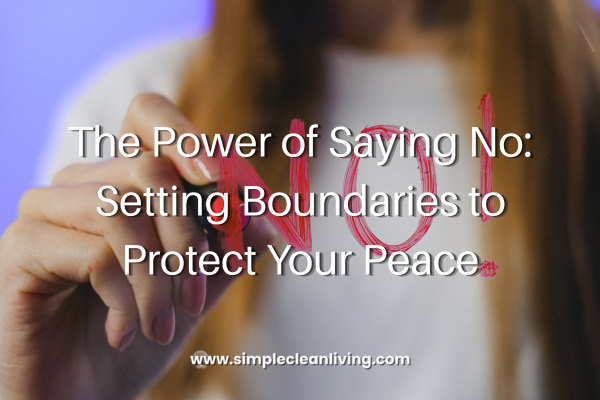
Saying no and setting boundaries isn’t selfish…it’s one of the most caring things you can do for yourself and the people around you.
Let’s be honest, most of us have a hard time saying no. Maybe you said yes to covering a coworker’s shift when you were already running on empty. Maybe you agreed to host a family dinner when you desperately needed a quiet weekend. Maybe you joined yet another committee at school because no one else volunteered, and you just couldn’t say no.
It feels easier in the moment to say yes. But all those little yeses add up. Before long, you’re stretched thin, resentful, and wondering why you feel so exhausted all the time. Sound familiar?
The truth is, your stress levels are closely tied to your boundaries…or lack of them. Learning to set clear, healthy boundaries is one of the most powerful tools you have for protecting your mental and emotional health. And it all starts with one small, two-letter word: no.
What are boundaries, really?
Boundaries are the limits you set around your time, energy, emotions, and personal space. They’re the invisible lines that say, “This is okay with me, and that is not.” They aren’t walls meant to keep people out. They’re more like a fence with a gate. You decide who comes in, when, and how much.
Healthy boundaries can look like a lot of different things. Telling a friend you can’t talk on the phone after 9 p.m. is a boundary. Declining a work project that isn’t in your job description is a boundary. Choosing not to discuss a sensitive topic with a family member who always leaves you feeling drained…that’s a boundary too.
Without these limits, other people’s needs, wants, and moods can take over your life. And when that happens, stress follows close behind.
Why boundaries reduce stress
Stress builds when we feel out of control, when we’re doing more than we can handle, when we feel pulled in every direction, or when we’re constantly putting everyone else first. Boundaries help fix that by giving you back a sense of control over your own life.
Think about the last time you said yes to something you really didn’t want to do. Maybe you felt a little twist in your stomach when the words came out. That’s your body telling you something. Over time, saying yes when you mean no creates resentment, anxiety, and burnout. It’s emotional overload, and it’s completely avoidable.
When you set a boundary, you’re deciding your own best interest. You’re saying, “I matter too.” That feeling, of standing up for yourself and being heard, even if only by you, is incredibly relieving. Stress eases when we stop overcommitting. We sleep better. We show up more fully for the things and people we actually care about.
Worth remembering
You can’t pour from an empty cup. Taking care of your own needs isn’t something to feel guilty about; it’s what makes it possible to truly show up for others.
Signs you might need better boundaries
It’s not always easy to recognize when your boundaries need work. Here are a few signs that it might be time to take a closer look:
You’re constantly exhausted
You feel drained after spending time with certain people or after agreeing to things you didn’t want to do.
There’s resentment building up
You find yourself feeling frustrated or bitter toward people, even ones you love, because you feel like you’re always giving and rarely receiving.
There’s no time for you
Your schedule is packed with obligations for others, but your own needs, hobbies, and rest keep getting pushed to the back burner.
You have anxiety about saying no
Just the thought of turning someone down makes you anxious, guilty, or afraid of what they’ll think of you.
How to start setting boundaries (without the guilt)
Here’s the thing: setting boundaries doesn’t mean you’re being rude or selfish. It means you’re being honest. And honestly? Most people respect that, even if there’s a little awkwardness at first.
Here are some practical ways to get started:
Get clear on what you need
Before you can set boundaries with others, you need to know your own limits. Ask yourself: what drains me? What do I need more of? Where do I feel resentful or overwhelmed?
Use simple, direct language
You don’t owe anyone a long explanation. “I can’t make it, but thanks for thinking of me” is a complete answer. “That doesn’t work for me right now” is too.
Buy yourself some time
If you’re not sure how to respond in the moment, it’s perfectly fine to say, “Let me check and get back to you.” That small pause gives you the chance to decide without pressure.
Expect pushback and be prepared
Some people won’t like your “no,” especially if they’re used to getting a “yes” from you. That’s okay. Staying calm and repeating your boundary, without over-explaining, is a skill that gets easier with practice.
Start small
You don’t have to overhaul everything at once. Pick one area of your life where you feel most stretched and start there. One small boundary, held consistently, builds confidence for the next one.
It does get easier…I promise!
The first few times you say no to something, it might feel uncomfortable. That’s normal. We’re often taught from an early age that saying yes is kind and saying no is selfish. Unlearning that takes time.
But here’s what happens when you stick with it: the anxiety starts to shrink. The resentment fades. You start showing up to the things you said yes to with actual energy and genuine enthusiasm, because they’re things you actually want to do. Your relationships often improve, too, because you’re more present and less burned out.
Protecting your peace isn’t about shutting people out. It’s about making sure that when you show up, for your family, your friends, your work, your community, you’re truly there. And that starts with being honest about what you can and cannot give.
So go ahead. Say no. Your peace is worth it.